- August 21, 2026
How to pack books for moving without damage starts with one simple idea: books are heavier and more fragile in a move than most people expect, so the way you box them matters as much as the box itself.
Whether you are moving across town or shipping your household overseas, the wrong packing method can cause bent covers, split spines, crushed corners, or boxes that are too heavy to lift safely.
In this guide, we walk through the best way to pack books for moving, from choosing the right moving box and packing supplies for moving to moisture protection, labeling, storage, and common mistakes to avoid.
If you have a valuable library, a mixed household shipment, or you simply want a cleaner, safer move, the right packing system will save time, reduce damage, and make unpacking easier. This step belongs in any guide on how to pack books for moving.
How to Pack Books for Moving the Right Way
Packing books is not just about filling boxes. It is about controlling weight, protecting edges, and preventing stress on the spine and covers during transit. A smart packing approach keeps the shipment manageable for movers, easier to stack, and less likely to shift on the road.
When we pack books professionally, we think in terms of box size, book type, destination climate, and how the boxes will be handled.
That matters for local moves, but it matters even more for long-distance or international shipments where the boxes may be transferred, stored, or exposed to temperature and humidity changes. Proper cushioning reduces mistakes when deciding how to pack books for moving.
Why Books Need Special Packing Attention
Books seem sturdy, but they are vulnerable to pressure, moisture, and poor weight distribution. Hardcovers can warp, paperbacks can curl, and dust jackets can tear if books are packed loosely or crammed too tightly.
The biggest issue is weight. A large box full of books can become difficult to lift, more likely to collapse, and more expensive to move if it creates handling problems.
The goal is to keep each box dense enough to stay stable but light enough to carry safely. Careful sorting is essential when learning how to pack books for moving.
Choose the Right Books to Pack Together
Group books by size and weight before you start packing. Heavy hardcovers should not go in the same layer as delicate paperbacks, and oversized art books should not be forced into small cartons.
If you are packing a mixed library, separate the books into categories first: standard books, oversized books, collectible books, and books you may want immediate access to after the move.
That makes the rest of the process faster and protects the books that need the most care. This step supports anyone learning how to pack books for moving safely.

Tell us about your move and get a personalized quote
based on your requirements.
What Packing Supplies and Moving Boxes Do You Need?
The best packing results come from using the right materials instead of simply using whatever box is available. Books put pressure on carton seams, so you need stronger boxes, proper cushioning, and basic moisture protection. This step helps explain how to pack books for moving without damage.
For most home moves, standard small moving cartons or book boxes work better than large boxes. Small boxes help control weight and are easier to stack. If you are unsure what to buy, think about strength first and capacity second.
Best Boxes for Books
The best moving boxes for books are compact, sturdy, and in good condition.
New cartons are ideal, but if you reuse boxes, make sure they are dry, clean, and free from crushed corners or weak tape lines. Moisture planning makes it easier to understand how to pack books for moving reliably.
Small moving boxes are usually the safest choice because they limit the total weight. Book-specific cartons are also useful when you have a large number of paperbacks, textbooks, or hardcover volumes that need dense, stable packing.
Packing Supplies That Actually Help
You do not need a lot of materials, but you do need the right ones. Weight control belongs in any guide on how to pack books for moving.
- Strong packing tape for the bottom and top seams
- Clean packing paper for wrapping valuable books or filling gaps
- Bubble wrap for special editions, dust jackets, or books with fragile covers
- Plastic bags or moisture barriers for long-distance or international moves
- Labels and a marker for box identification
If you are using professional packing services, ask what supplies are included and what should be set aside for specialty items. That can help you avoid buying duplicate materials.
When to Use Extra Moisture Protection
Moisture is one of the most overlooked risks for books in transit. Even if the move is short, boxes may sit in a truck, storage unit, or warehouse where humidity changes can affect paper and covers. This step makes it easier to understand how to pack books for moving reliably.
For international moves, coastal routes, storage, and summer transport, moisture protection is worth adding. Use plastic wrap or sealed liners carefully, though, because books should not be packed wet or trapped in condensation. The goal is protection, not sealing in moisture.
Step-by-Step: Best Way to Pack Books for Moving
A methodical packing process prevents the most common book damage: crushed corners, warped pages, and overpacked boxes. Work slowly enough to keep the books aligned, but efficiently enough to avoid piling them into half-assembled cartons. Proper cushioning helps explain how to pack books for moving without damage.
Step 1: Prepare the Box
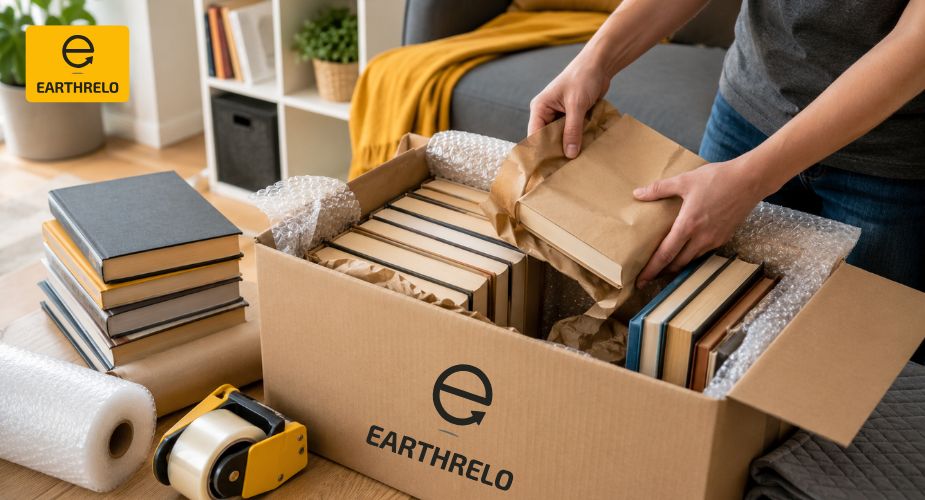
Start by taping the bottom seams securely with extra tape across the center and edges. For heavy book boxes, do not rely on a single strip. If the box feels weak or soft, replace it before packing.
Line the bottom with a flat layer of packing paper if you want a small cushion between the books and the carton base. Avoid thick padding that wastes space and encourages movement. Careful sorting makes it easier to understand how to pack books for moving reliably.
Step 2: Sort by Size and Weight
Place similar books together so the box settles evenly. Heavy hardcover books should go in with heavy books, and paperbacks should go with paperbacks. Oversized books may need to lie flat on top of a compact layer rather than forcing everything into one stack.
This is one of the simplest moving packing tips that prevents shifting. A box packed with mixed sizes tends to sag in the middle, which can bend covers and weaken the carton. Moisture planning reduces mistakes when deciding how to pack books for moving.
Step 3: Pack Books Upright or Flat as Needed
For standard books, packing them upright like they sit on a shelf usually works best. Keep them snug, but not compressed.
If the books are too loose, use packing paper to fill gaps. If they are too tight, the spines can bend. That choice supports anyone learning how to pack books for moving safely.
For heavy or oversized books, laying them flat is often safer. Stack them in small layers so the weight is distributed evenly. Avoid placing delicate books at the bottom of a stack under heavier volumes.
Step 4: Fill Gaps and Stabilize the Contents
After each layer, check for movement. Books should not slide when you gently tilt the box. Use packing paper to fill empty spaces near the sides and top, especially if the box is not completely full.
A box that shifts during transit can damage edges and increase the chance of the carton crushing under load. Stability matters more than squeezing in one more book. Proper cushioning makes it easier to understand how to pack books for moving reliably.
Step 5: Seal and Label Clearly
Close the box and tape the top seam firmly. Then label it with the contents and room destination. If the box contains valuable, fragile, or reference books you need quickly, mark that clearly.
A good label should tell you what is inside and how it should be handled. That makes unloading easier and reduces the chance of books ending up in the wrong room or being stacked under heavier items.

Have questions about your upcoming move?
Our team is ready to help.
How to Pack Heavy Books, Collectibles, and Special Collections
Not every book should be packed the same way. Textbooks, hardcovers, signed editions, and older books often need more care than standard reading copies. This step is essential when learning how to pack books for moving.
The more valuable or delicate the collection, the more important it becomes to slow down and create protection around each item instead of treating all books as bulk household goods.
How to Pack Heavy Books Safely
Packing heavy books starts with limiting the box size. A small box is almost always better than a large one because it keeps the weight manageable and protects the carton from bottom failure. Clear labeling belongs in any guide on how to pack books for moving.
Place the heaviest books at the bottom if you are stacking flat, and keep the weight balanced across the base. Do not use oversized boxes just because they are available. A box that is too large invites overpacking, which leads to both damage and lifting injuries.
How to Pack Collectible or Valuable Books
For rare books, signed copies, leather bindings, or books with dust jackets, consider individual wrapping. Use clean packing paper to protect covers and keep dust jackets from rubbing against one another. Careful sorting reduces mistakes when deciding how to pack books for moving.
If a book has a fragile jacket or an especially delicate binding, add a light layer of padding around it, but do not compress the book tightly. Too much pressure can leave dents or distort the spine.
When Professional Packing Makes More Sense
For private libraries, inherited collections, office archives, or books with sentimental and financial value, professional packing services often make more sense than a DIY approach. A trained team can choose the right carton sizes, protection materials, and packing methods for each category of book.
At Earthrelo, we often see that the real value of professional packing is not just damage reduction. It is also time savings, better inventory control, and fewer surprises when the shipment reaches its destination. That choice makes it easier to understand how to pack books for moving safely.
How Do You Protect Books from Moisture, Storage, and Long-Distance Transit?
Books can survive a move very well when they stay dry, stable, and away from prolonged temperature swings. The challenge is that many moves involve short-term storage, truck transit, ocean freight, or multiple handoffs where conditions are not fully under your control.
If you are moving locally, you mainly need to protect against spills, rain, and sitting in a damp garage. For a cross-country or international move, the risks are broader, and moisture planning becomes part of the packing strategy. Moisture planning is essential when learning how to pack books for moving.
Moisture Risks You Should Plan For
Humidity can warp covers, make pages ripple, and encourage mildew if books are packed damp or stored poorly.
Even a clean-looking box can be a problem if it is placed against a cold surface, in a humid space, or in a container with poor ventilation. Careful sorting helps explain how to pack books for moving without damage.
That is why we recommend dry packing materials, clean cartons, and avoiding any sealed-in moisture. Books should never be packed right after being exposed to water or heavy condensation.
Storage Tips Before and After the Move
If the books will sit in storage, keep them off the floor and away from exterior walls when possible.
Choose a dry, stable environment, and avoid overfilling the boxes so air can circulate slightly around the contents. This step makes it easier to understand how to pack books for moving safely.
Do not stack very heavy book boxes too high, especially if they will be stored for weeks or months. The lower boxes can flatten under the pressure.
International and Long-Distance Considerations
For longer transit, packaging discipline matters even more. Boxes may be handled multiple times, and routes can include climate changes that affect paper and bindings. This step reduces mistakes when deciding how to pack books for moving.
If your shipment includes an important library, rare books, or business materials, ask for a packing strategy that fits the route and the handling plan. Earthrelo’s packing and relocation support can help you match the protection level to the move type instead of relying on a one-size-fits-all approach.
What Mistakes Should You Avoid When Packing Books?
Most book damage happens because of a few predictable mistakes. The good news is that they are easy to avoid once you know what causes them.
A careful packing process is usually faster than a rushed one, because it prevents repacking, broken boxes, and damaged books that need to be sorted again later. Weight control supports anyone learning how to pack books for moving safely.
Common Packing Mistakes
- Using large boxes that become too heavy to lift safely
- Mixing heavy hardcovers with delicate paperbacks in the same layer
- Leaving empty spaces that allow books to shift during transport
- Packing books with moisture, dirt, or dirty packing materials
- Skipping reinforcement on the bottom seams of the box
- Overstuffing the box so the spines or covers bend
Why These Mistakes Matter
A box that is too heavy can fail at the bottom, strain the mover, or crush other items in the truck. Loose packing creates motion, and motion creates rubbing, bent pages, and corner damage.
Moisture issues can show up after the move, which makes them especially frustrating because the damage is often hidden until unpacking. Clear labeling makes it easier to understand how to pack books for moving safely.
How to Correct Problems Before They Start
Before sealing each box, lift it briefly and check the balance. If it feels awkward, empty it and redistribute the contents. If the carton bows outward, remove books immediately. That choice belongs in any guide on how to pack books for moving.
The safest book box is the one that is easy to carry, clearly labeled, and packed tightly enough to stay stable without becoming overcompressed.
Practical Tips for Unpacking, Shelving, and Reusing Book Boxes
Packing books well is only part of the job. How you unpack them affects whether the books stay in good condition after the move. A little organization on the front end makes shelving and storage much easier later.
If your books are heading into storage instead of directly onto shelves, the unpacking step is also when you can check for moisture, bending, or hidden pressure damage before it becomes a larger issue. Moisture planning helps explain how to pack books for moving without damage.
Unpack in the Right Order
Start with the boxes you marked as essential or priority items. Those may include reference books, work materials, school books, or collection pieces you want to inspect first. Proper cushioning is essential when learning how to pack books for moving.
As you unpack, place books on shelves in a stable position and avoid stacking them in uneven piles for long periods. Books do best when they are supported cleanly rather than left leaning.
Reuse Boxes the Smart Way
Some moving boxes can be reused if they stayed dry and structurally sound. But once a book box has been overloaded or bent out of shape, it is better to discard it than risk another move with weakened seams.
If you are planning a future move, keep a few good cartons flattened and stored in a dry place. That can save money later, but only if the boxes are still strong enough to support weight.
Wrapping Up
How to pack books for moving comes down to a few practical habits: use small, strong boxes; control weight; separate book types; protect against moisture; and label each carton clearly.
Those steps make a real difference whether you are moving a personal library across town or shipping books as part of a larger international relocation.
If your collection includes valuable books, office archives, or a large volume of heavy titles, professional packing can save time and reduce risk.
Earthrelo helps customers choose the right packing approach for the move, the route, and the level of protection the shipment truly needs. When you want books packed correctly the first time, reaching out for expert packing support is a smart next step.