
- August 31, 2026
Art moving companies are the difference between a shipment that arrives intact and one that creates expensive, avoidable damage.
If you are sending a painting, sculpture, antique, gallery piece, or family artwork overseas, the real challenge is not just transportation it is controlling risk at every step, from packing and crating to transit and delivery.
This guide explains how international art shipping actually works, what professional art movers do to protect valuable pieces, how customs and insurance fit into the plan, and what to look for when choosing a company you can trust.
If you are comparing options for a collector, museum, artist, gallery, or home collection, this will help you make a confident decision before the work leaves your space.
What Art Moving Companies Do for International Shipments
When people search for art moving companies, they are usually trying to solve one problem: how to move something valuable, fragile, and often irreplaceable without exposing it to unnecessary risk.
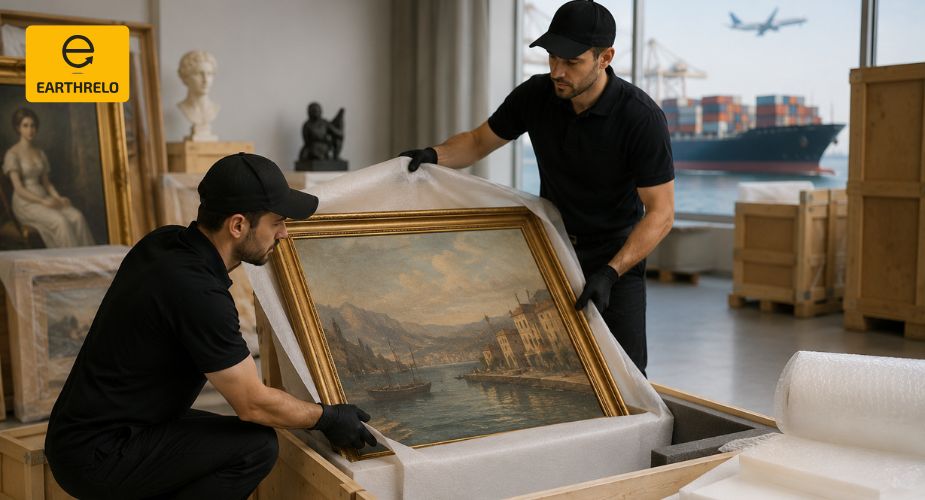
The right provider does much more than load a box onto a truck. They plan, protect, document, and coordinate the shipment so the artwork is handled with the right materials and the right procedures from start to finish.
That matters because artwork is vulnerable in ways standard household goods are not. Frames can shift, canvases can flex, varnish can react to temperature swings, sculptures can chip at pressure points, and antiques may require very specific handling based on age, finish, or construction.
International transit adds more touchpoints, more movement, and more opportunities for damage if the process is not controlled. Early coordination lets art moving companies plan the route more carefully.
Core Services That Matter Most
A dependable art moving company typically focuses on services that reduce handling and stabilize the piece during travel. Those services may include professional packing, custom crating, white-glove pickup, climate-conscious transportation planning, condition documentation, and destination delivery that minimizes transfers. Careful planning gives art moving companies better control over the shipment.
For higher-value pieces, custom crating is often one of the most important protections. A crate should be built for the object, not just around it.
That means the internal fit, cushioning, anchoring, and access points all need to match the work’s size, material, and travel profile. Early coordination helps art moving companies explain the protection plan clearly.
Why Standard Movers Are Not Enough
A general mover may be excellent at household relocation and still be the wrong choice for fine art shipping.
Standard moving processes often prioritize speed and volume, while artwork requires controlled handling, specialized packing materials, and a lower tolerance for movement or stacking. That detail allows art moving companies to protect each handoff.
This difference becomes even more important when you are shipping internationally. Customs procedures, long transit windows, possible warehouse storage, and multiple handoffs all increase exposure. An experienced art transport provider anticipates those steps instead of reacting to them after something goes wrong.

Tell us about your move and get a personalized quote
based on your requirements.
How Professional Packing and Crating Protect Artwork
For international artwork shipping, packing is not a last-minute task. It is the main defense against vibration, impact, moisture changes, and pressure during transit.
The packing method should be based on the medium, size, fragility, surface condition, and final destination, not on a one-size-fits-all approach. This safeguard allows art moving companies to protect each handoff.
The best art movers begin by assessing how the piece should be stabilized before it ever enters a crate or shipping container. A painting on canvas needs different protection than a framed photograph, marble sculpture, antique cabinet, or mixed-media installation.
In practice, this is where experience matters most, because the wrong material or an overly tight fit can create damage just as easily as poor handling can. Early coordination helps art moving companies reduce handling risk.
Common Packing Methods for Fine Art Shipping
The packing approach should match the object’s value and sensitivity. In many cases, the process may include acid-free wrapping, glassine or protective surface barriers, foam support, suspension packing, edge protection, or double boxing before crating. This step gives art moving companies better control over the shipment.
Collectors and galleries should pay special attention to anything with a delicate surface, fragile frame, loose components, or historical finish. Antique moving services often require even more caution because older materials can react unpredictably to pressure, adhesives, and temperature fluctuations.
Read also: Art Movers in Chicago
Why Custom Crating Is Often Worth It
Custom crating is usually the safest option when the artwork is high in value, difficult to replace, or especially sensitive to movement. A custom-built crate can create a controlled micro-environment and reduce the chance of the piece shifting inside the package.
That said, not every object needs the same level of packaging. A trusted art moving company should explain when custom crating is appropriate and when a simpler method may still be acceptable.
The goal is to balance protection, budget, and transit conditions without underpacking or overspending unnecessarily. Careful planning lets art moving companies plan the route more carefully.
Materials and Handling Choices That Reduce Risk
The materials used around the art are just as important as the crate itself. Conservation-friendly materials, secure internal blocking, and properly sized supports help prevent abrasion and movement.
Good handling also means limiting unnecessary transfers, carrying pieces upright when appropriate, and keeping a clean chain of custody from origin to destination.
A practical rule: if a piece can slide, flex, rub, or press against a hard surface inside the package, the packing plan needs more work.
That is the kind of detail experienced art movers near you should be prepared to explain clearly. That detail helps art moving companies prevent avoidable damage.
What to Expect from Art Shipping Across Borders
International art shipping involves more than transit time. It is a chain of logistics decisions that affects safety, timing, and delivery reliability. For collectors and institutions alike, the biggest mistakes usually happen when a shipment is treated like standard freight instead of a controlled specialty move.
A well-managed shipment begins with a clear plan for pickup, packing, export preparation, transit mode, receiving arrangements, and final placement.
The more complex the piece or the route, the more important it is to coordinate each step ahead of time. A clear process supports the standards reliable art moving companies should follow.
Air, Ocean, and Ground Transit Considerations
Different transit modes create different risks. Air can reduce time in transit, which may help limit exposure, but it still requires proper packaging and careful transfer handling.
Ocean shipping may be more economical for larger shipments, but it can expose artwork to a longer time in transit and more environmental variation. Ground transport is often part of both options and needs the same level of handling discipline.
The right choice depends on the value of the work, its sensitivity to climate or vibration, the shipment volume, and the destination schedule. A careful art shipping plan weighs speed, budget, and protection instead of assuming one mode is always best. This step helps art moving companies reduce handling risk.
Climate-Controlled Transportation and Storage
Some artwork benefits from climate-controlled conditions, especially if it contains wood, paper, canvas, textiles, varnishes, or materials that can react to humidity and temperature changes. Climate control is not just about comfort. It is about reducing stress on the materials during loading, transit, and any short-term storage.
This is especially important when a shipment may be staged through warehouses, held during a handoff, or delivered into a location with a very different environment than the origin.
If a provider offers climate-controlled art transport, ask how that control is maintained in real operations, not just advertised in general terms.

Have questions about your upcoming move?
Our team is ready to help.
How Customs Clearance and Documentation Affect Delivery
International shipments can be delayed or disrupted when documentation is incomplete or inconsistent. For artwork, that can create more than a timing issue.
It can increase handling, storage, and administrative costs, and in some cases it may keep the shipment from moving as planned. Careful planning helps art moving companies reduce handling risk.
The solution is preparation. Before the shipment leaves, the moving team and the shipper should make sure the documentation is accurate, consistent, and aligned with the route and destination requirements.
Requirements vary by country, shipment type, and the value or nature of the artwork, so the process should always be verified for the specific move.
What Documentation Usually Needs to Be Ready
Typical shipment paperwork may include a detailed inventory, descriptions of each piece, declared values, condition notes, packing details, and any documents required by carriers or destination authorities.
For valuable collections, photos are also useful because they help document the condition of the work before transport. This step helps art moving companies explain the protection plan clearly.
Good documentation does more than satisfy a formality. It helps prove what was shipped, supports claims if damage occurs, and gives every party in the chain a clearer understanding of what is inside each container or crate.
Read also: How to Choose Fine Art Movers for Moving to Barcelona From US
How to Avoid Delays and Cost Surprises
Unexpected charges often appear when a shipment is not fully planned. Common causes include last-minute packing changes, re-crating, waiting time, storage, access issues at pickup or delivery, and special handling that was not discussed in advance.
The best way to reduce those surprises is to ask detailed questions before booking. You want a clear explanation of what is included, what can change the price, and what may require additional handling.
That kind of clarity is especially important for artwork because the shipment often needs more preparation than a standard move. Careful planning helps art moving companies explain the protection plan clearly.
How to Choose a Trusted Art Moving Company
Choosing the right provider is not about finding the cheapest quote. It is about finding an art moving company that understands the difference between moving objects and protecting assets. The best fit will ask good questions, explain process choices, and show you how they reduce risk.
If you are comparing artwork shipping companies, look for signs that they understand the real operational side of fine art shipping: packing methods, transit planning, handling discipline, documentation, and delivery coordination.
A strong provider should make the process feel controlled, not improvised. This step lets art moving companies plan the route more carefully.
Questions to Ask Before You Book
- How do you determine the packing method for each piece?
- Do you offer custom crating for delicate or high-value artwork?
- How do you plan for climate sensitivity during transit?
- What steps help prevent hidden fees after booking?
- How is condition documentation handled before pickup?
- What is your approach to international coordination and delivery timing?
Red Flags That Suggest More Risk
Be cautious if a provider gives vague answers about handling, rushes the quoting process, or treats every piece the same.
Other warning signs include unclear insurance explanations, no visible process for condition checks, and a focus on price alone without a real discussion of protection. A clear process helps art moving companies prevent avoidable damage.
The right art movers should be comfortable explaining trade-offs. For example, they should be able to tell you when a more expensive packing method is justified and when it is not. That kind of transparency is often what separates a true specialty mover from a general shipping provider.
Why Earthrelo Is Relevant for Fine Art Shipping
For customers who need international relocation support, Earthrelo can help coordinate fine art shipping with the same practical mindset used for complex household and specialty moves.
That means focusing on preparation, protection, and shipment planning so the artwork is handled with care at each stage. That detail supports the standards reliable art moving companies should follow.
When you are moving from one country to another, the value is not just in transportation itself. It is in having a team that understands how packing, crating, routing, and delivery details work together to protect the final outcome.
Practical Checklist for Safe International Art Transport
A strong shipment usually comes down to preparation. Before the artwork leaves your space, use a simple checklist to make sure the most important details are covered.
This helps you compare providers more confidently and reduces the chance of avoidable problems. Early coordination gives art moving companies better control over the shipment.
Before Pickup
- Confirm the exact inventory of each piece
- Photograph the artwork and note visible condition details
- Review the packing and crating plan
- Ask how the shipment will be handled at each transfer point
- Verify delivery access at the destination
During Transit and Delivery
- Keep records of shipment tracking or status updates
- Confirm whether climate-sensitive items need special timing
- Check that the destination location is ready to receive the work
- Inspect each piece promptly on arrival
- Compare the delivered condition with pre-shipment documentation
A checklist like this is especially useful for galleries, museums, and collectors managing multiple works. It turns the move into a controlled process instead of a series of rushed decisions.
Wrapping Up
Art moving companies play a critical role in protecting valuable artwork during international shipping. The right provider does more than move boxes. They reduce handling risk, choose the correct packing method, build appropriate crating, plan for transit conditions, and keep the shipment organized from pickup to delivery.
If you are shipping a single piece, a private collection, or a full gallery inventory, the safest next step is to compare providers based on process, transparency, and experience with fine art shipping rather than price alone.
Earthrelo can help you plan a personalized fine art shipping quote that reflects your artwork, route, and service needs so you can move forward with more confidence.