- October 26, 2026
Fine art and collectibles require a different moving plan from ordinary household goods because a small impact, temperature change, vibration, or handling mistake can affect an irreplaceable object. International transport adds more handoffs, documentation, packing decisions, and route-related risks to manage.
This guide explains how to prepare artwork and collectibles for international relocation, choose appropriate packing and crating, evaluate fine art shipping options, review insurance carefully, and compare providers before booking. You will also learn when professional international art shipping is the safer and more practical choice.
Why Fine Art and Collectibles Need a Specialized Moving Plan
The first step in protecting valuable pieces is recognizing that their risks are not the same as those of furniture, clothing, or standard household boxes.
Artwork may have fragile surfaces, projecting frames, delicate glazing, old adhesives, or materials that react to changes in humidity. Collectibles may be small but unusually vulnerable to shock, abrasion, or loss of individual components.
When protecting fine art and collectibles, a strong plan starts with the object itself, not with the size of the shipment. The correct method depends on the piece’s construction, value, condition, destination environment, handling requirements, and transport route.
Identify the Risks Before Packing
Common risks include direct impact, vibration, pressure from poor cushioning, movement inside a crate, surface abrasion, moisture, condensation, extreme temperatures, and excessive light exposure. A framed painting may be damaged by pressure against its face, while a sculpture may be vulnerable at its legs, arms, base, or other projecting elements.
During transport of fine art and collectibles, older pieces can require additional caution. A frame may look sturdy while its joints are weakened.
A painted surface may have loose or raised areas that are not obvious in a quick inspection. Paper, textiles, wood, leather, ceramics, metals, and mixed-media objects all respond differently to handling and environmental changes.
Build an Accurate Inventory and Condition Record
Before the mover arrives, create an inventory that includes the artist or maker when known, title or description, dimensions, materials, frame details, identifying marks, and replacement or declared value. Photograph each item from several angles, including the frame, back, base, hardware, and any existing marks.
Before shipping fine art and collectibles, a condition report should distinguish pre-existing wear from any change that occurs during transport.
For higher-value work, consider recording details such as scratches, chips, craquelure, loose components, frame separation, discoloration, or previous repairs. Keep digital copies of the inventory, photographs, appraisals, purchase records, and any specialist handling instructions.
When moving fine art and collectibles, this documentation serves two purposes. It helps the packing team select the right protection, and it gives you a reliable reference when reviewing the shipment at delivery.
It also makes quote comparisons more accurate because providers can evaluate the actual items rather than a vague description such as “several paintings.”
Decide Which Pieces Need Professional Handling
Before shipping fine art and collectibles, not every collectible requires a custom crate, but valuable, unusually shaped, fragile, or irreplaceable objects should not be treated as ordinary boxes.
Professional support is especially useful when a piece has fragile glazing, a large or heavy frame, a high center of gravity, delicate protrusions, unstable components, or a history of conservation work.
When packing fine art and collectibles, at Earthrelo, fine art moving services can be considered as part of a broader international relocation plan when ordinary household packing is not appropriate.
The practical objective is not simply to move the piece, but to match its protection and handling requirements to the risks of the journey.

Tell us about your move and get a personalized quote
based on your requirements.
How to Choose the Right Packing and Crating Method
Packing is where many preventable problems begin. A visually impressive box is not automatically a suitable art crate, and more padding does not always mean more protection. The packaging must control movement, protect vulnerable surfaces, support the object correctly, and remain practical for handling at each stage of the shipment.
For fine art and collectibles, the right method also depends on whether the piece is moving by air, ocean, ground transport, or a combination of modes. A shipment that experiences multiple transfers may need more robust protection than one traveling a short distance with limited handling.
Use the Object’s Construction to Guide the Packaging
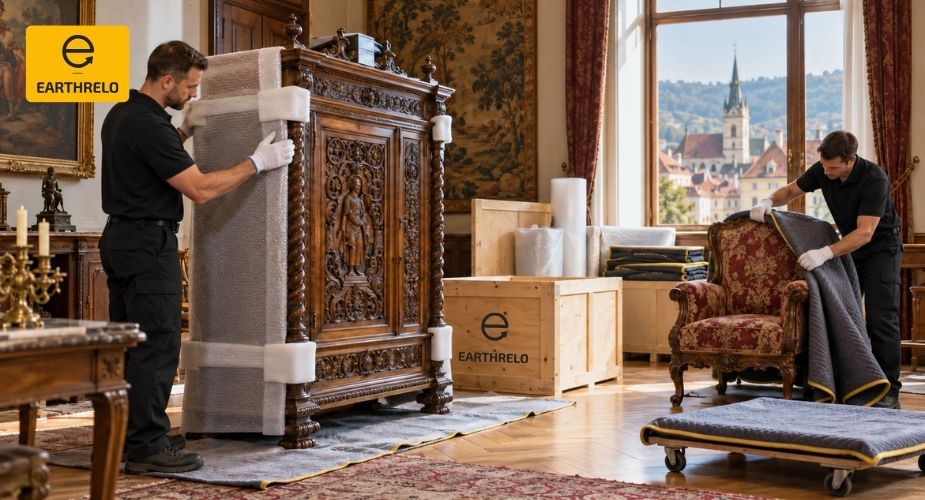
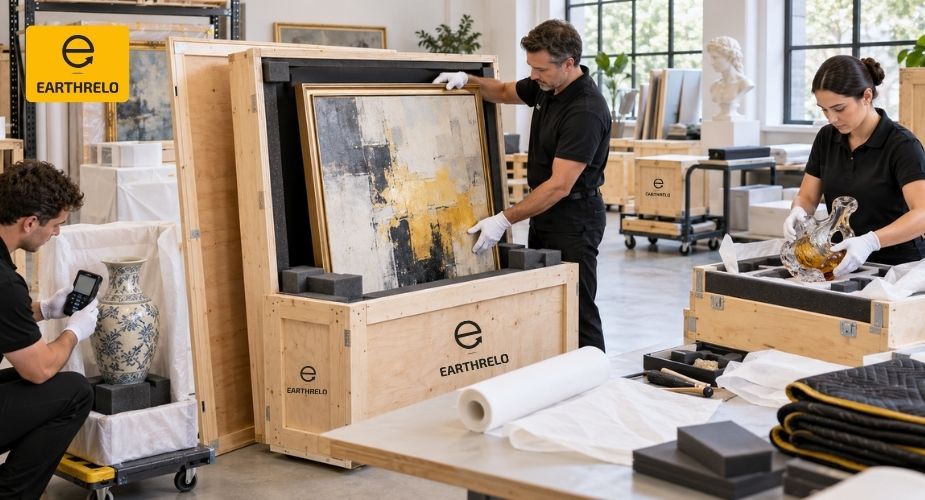
A framed painting may need surface protection, a padded frame surround, corner protection, and a rigid outer container.
The protective materials must not press directly against a fragile painted surface or trap moisture against the artwork. Glazing may require careful stabilization, and the frame should be supported without transferring force to weak joints.
When packing fine art and collectibles, sculptures and three-dimensional collectibles need a different approach. The packing plan should support the strongest structural points while isolating delicate projections. A custom-fitted interior can prevent the object from shifting, but the supports should not place pressure on thin, decorative, or historically sensitive areas.
Small collectibles also deserve careful planning. Individually wrapping every object may not be enough if pieces can collide inside a carton. Compartments, dividers, inert cushioning where appropriate, and a clear count of components can reduce abrasion and loss during handling.
Know When a Custom Crate Is Justified
When moving fine art and collectibles, a custom crate is generally worth considering when the item is high-value, oversized, unusually shaped, fragile, difficult to replace, or sensitive to vibration and impact.
It can provide a rigid protective shell and a designed interior, but it adds weight, volume, handling requirements, and cost.
A lighter protective case or reinforced packing method may be adequate for some smaller or more durable items. The decision should be based on the object’s vulnerability and the transport route rather than on a one-size-fits-all rule.
When moving fine art and collectibles, ask the moving company to explain what the proposed packaging protects against and what it does not. A useful quote should identify whether packing, materials, custom crating, unpacking, debris removal, and delivery inside the destination are included or priced separately.
Avoid Common Packing Mistakes
Several shortcuts create risk even when the outside package appears secure:
- Do not allow bubble wrap or other materials to rest directly against an unstable painted, varnished, or delicate surface without an appropriate protective layer.
- Do not leave empty space inside a crate or carton where the piece can shift during movement.
- Do not lift framed work by fragile frame ornamentation, hanging wire, or projecting elements.
- Do not stack heavy items on top of art containers or place unprotected pieces together because they appear similar in size.
When moving fine art and collectibles, packing should be documented with photographs when practical, especially for custom crating. Photos of the protected object, interior supports, crate markings, and final closure can help confirm how the shipment was prepared.
Tell us about your move and get a personalized quote
based on your requirements.
What Should You Check Before Booking International Art Shipping?
Choosing a provider for international fine art moving involves more than comparing a single transportation price. The lowest initial quote may not include specialized packing, storage between transport stages, destination handling, unpacking, or other services required to complete the move safely.
During transport of fine art and collectibles, your goal is to compare equivalent scopes of work. If one provider is quoting basic transport and another is quoting custom crating with room-of-choice delivery, the numbers cannot be evaluated fairly until the service details are aligned.
Request an Itemized Quote
Ask for a written explanation of the services included for each piece or group of pieces. Depending on the shipment, relevant line items may include inventory preparation, pickup, professional packing, custom crating, origin handling, transportation, storage, destination delivery, unpacking, installation, and disposal of packing materials.
When protecting fine art and collectibles, also ask which circumstances could change the price. Examples can include a difficult pickup location, stairs, limited elevator access, oversized crates, waiting time, revised piece dimensions, additional packing, a change in delivery conditions, or storage beyond the originally planned period.
Unexpected charges are often caused by assumptions that were never written into the quote. Before booking, confirm who supplies the final measurements, whether the crate dimensions are included, how access issues are handled, and whether delivery is to the building entrance or to a specific room.
Compare Experience With Similar Objects
For fine art and collectibles, a provider’s general moving experience does not automatically demonstrate experience with fine art.
Ask whether the team has handled objects similar in size, material, fragility, and value to yours. The relevant experience may involve framed paintings, sculpture, antiques, designer collectibles, mixed-media work, or other specialized pieces.
You should also understand who coordinates the shipment and how information is transferred between the origin team, transport providers, storage locations, and destination personnel. Multiple handoffs create opportunities for labeling errors, missed instructions, and unclear responsibility.
When packing fine art and collectibles, Earthrelo’s role should be evaluated in the context of your complete relocation. If fine art is moving with household goods, the plan should clearly separate specialized pieces from ordinary items and identify how each category will be packed, tracked, and delivered.
Review Communication and Documentation Practices
For valuable fine art and collectibles, a professional process should give you a clear inventory, written scope, contact point, packing plan, and method for recording condition. You should not have to rely on informal promises about careful handling.
Before pickup, provide written instructions for fragile components, display orientation, approved lifting points, unpacking preferences, and any known conservation concerns. If an object should not be exposed to particular conditions or handled by untrained personnel, that information should be visible in the shipment records rather than communicated only by phone.

Have questions about your upcoming move?
Our team is ready to help.
How to Manage Insurance, Documentation, and Delivery Risk
Before shipping fine art and collectibles, protection during transit and financial protection after a loss are related but separate issues.
Good packing can reduce the chance of damage, but it does not replace a careful review of coverage. Similarly, insurance cannot restore an irreplaceable object or eliminate the need for condition documentation.
Review the financial and operational risks together before the shipment leaves. This is especially important when the value of the pieces is high, the route includes several transport stages, or the collection contains objects that are difficult to appraise or replace.
Understand Fine Art and Collectibles Insurance
Ask exactly what coverage is available, whether it applies during packing and storage as well as transportation, how values are established, and what exclusions or limits may apply. Coverage terms can differ by provider, shipment type, destination, declared value, and the condition of the item before transport.
Do not assume that a standard household moving valuation, homeowners policy, or general cargo provision provides the protection you need for fine art and collectibles.
Ask whether breakage, concealed damage, pairs and sets, restoration costs, depreciation, and loss of value are addressed. These terms can materially affect the outcome of a claim.
Read the documentation before booking and ask questions in writing when the language is unclear. Earthrelo can discuss the moving scope and available arrangements relevant to the shipment, but the specific terms of any coverage should be confirmed in the applicable documents rather than assumed from a conversation.
Prepare Shipment Documentation Carefully
For valuable fine art and collectibles, the inventory should match the packing labels and the transport documents. Use consistent item numbers, descriptions, photographs, and crate identifiers. For a collection with many small components, record what is packed together and where each component is located.
Keep copies of purchase records, appraisals, conservation reports, receipts for previous repairs, and photographs. These documents can help establish condition and value, but an appraisal’s purpose and age may affect whether it is accepted for a particular claim or transaction.
Because documentation and entry procedures can vary by destination and type of object, verify any applicable requirements with the relevant authorities or qualified specialists before the shipment is finalized. The moving company should not be expected to make assumptions about a piece’s value, origin, material, or documentation.
Inspect Before Signing for Delivery
With fine art and collectibles, at destination, inspect the outer crate and packaging before opening when possible. Photograph visible damage, unusual punctures, crushed corners, water marks, broken seals, or signs that the container was mishandled. Then compare the contents against the inventory and condition record.
Open the shipment in a suitable area with enough space, stable lighting, and clean surfaces. Do not discard packing materials immediately if damage is found. Preserve the packaging, record the condition, and notify the appropriate contact according to the shipment documents.
For fine art and collectibles, for valuable or delicate work, professional unpacking and placement can reduce the risk of a second handling incident after delivery. A piece that arrives safely can still be damaged by rushed removal from a crate, incorrect lifting, or installation using unsuitable hardware.
How to Plan an International Fine Art Move From Pickup to Delivery
International art shipping works best as a sequence of controlled decisions rather than a single transportation booking. Start early enough to inventory the collection, evaluate packing requirements, coordinate pickup access, prepare documentation, and account for possible storage or scheduling changes.
For fine art and collectibles, the exact timing depends on the shipment size, route, transport mode, packing requirements, season, destination conditions, and the availability of the people responsible for receiving the pieces. A provider should explain the expected stages without presenting an unsupported guaranteed delivery date.
Create a Piece-Level Move Plan
With fine art and collectibles, separate the collection into practical categories: items that can move with reinforced professional packing, items requiring custom crating, items that need specialist review, and items that should remain in place until a later decision.
This avoids spending the same amount on every object and helps focus resources where they reduce the most risk.
For each piece, record its measurements, weight if known, handling instructions, destination room, unpacking preference, and any condition concern. Confirm whether doors, elevators, stairways, loading areas, and final placement locations can accommodate the packed dimensions—not just the uncrated artwork.
Coordinate the Route and Handoffs
A shipment may involve origin pickup, packing, local transport, consolidation or storage, international transportation, destination handling, and final delivery. Every handoff should have a clear owner, item reference, and communication process.
For valuable fine art and collectibles, ask how the shipment will be identified and how exceptions will be reported. If a crate is delayed, an access problem occurs, or the delivery location changes, you should know who makes the decision and how additional costs are approved.
When combining art with a household relocation, avoid assuming that all goods should follow the same schedule.
Before shipping fine art and collectibles, a household shipment may be ready before a custom crate is complete, or a destination home may not be prepared for large art containers. Separating the plans can be more efficient and safer than forcing everything into one departure date.
Make the Final Provider Decision
Before signing, compare providers using the same criteria: itemized scope, packing method, crating plan, route and handoff explanation, documentation process, communication, storage terms, delivery details, and coverage information. Price matters, but it should be assessed against the risk of inadequate preparation and the cost of solving problems later.
With fine art and collectibles, a practical warning sign is a quote that gives a confident total without asking for photographs, measurements, material information, access details, or declared values.
Another is a vague promise that every object will be “handled carefully” without explaining how the packing and delivery method will work.
For a move involving several countries, high-value pieces, or complex household logistics, an experienced international relocation mover can help coordinate the broader plan.
Earthrelo’s fine art moving services may be relevant when you need specialized packing and crating integrated with an international relocation, subject to the specific scope and details of your shipment.
Wrapping Up
Moving fine art and collectibles internationally without damage depends on preparation at the object level. Document condition, classify each piece by risk, select packing that controls movement without creating pressure, and use custom crating where the item’s vulnerability and route justify it.
Just as important, compare complete quotes rather than transportation prices alone. Confirm what packing, handling, storage, delivery, unpacking, documentation, and coverage arrangements include, and identify which circumstances could create additional charges.
With a clear inventory, realistic route plan, written scope, and careful delivery inspection, you can make a more confident decision about international fine art moving.
When specialized protection must be coordinated with a broader relocation, Earthrelo can be considered for fine art moving services and related packing or crating needs based on the requirements of your shipment.