- November 24, 2026
White glove moving for fine art from the USA to the UK requires far more than placing valuable objects in a standard moving truck and hoping they arrive safely.
The right plan accounts for the artwork itself, its frame and glazing, the gallery or residence at each end, the transport route, packing method, documentation, and the financial consequences of damage or delay.
For collectors, galleries, designers, and estates, the goal is controlled handling from pickup through delivery.
This guide explains how fine art movers plan a USA-to-UK shipment, when custom crating is worthwhile, how to evaluate fine art insurance, what New York customers should ask before booking, and how to choose a service that matches the value and sensitivity of the collection.
White Glove Moving for Fine Art From the USA to the UK
White glove moving is a specialized service built around careful handling, protective preparation, coordinated transportation, and placement at the destination. With fine art, the service should be planned around the individual piece rather than treated as a standard household shipment.
What White Glove Service Should Include
For white glove moving, a professional and safe fine art move normally begins with an assessment. The mover should understand what is being transported, how it is currently installed, whether it is framed or glazed, how large and heavy it is, and whether the piece has known vulnerabilities.
A painting with aged varnish, a sculpture with delicate protrusions, and a photograph behind museum glass require different handling decisions.
The assessment should also cover access. Narrow staircases, freight elevators, loading docks, parking restrictions, long carries, and delivery to an upper-floor room can affect labor, equipment, timing, and risk. These details matter just as much as the distance between the origin and destination.
White glove moving service may include room-of-choice delivery, protective floor and wall covering, careful unwrapping, placement, and removal of packing materials when arranged in advance. Installation, hanging, lighting, and art handling beyond delivery should be confirmed separately so that the scope is clear before booking.
Why Fine Art Needs a Different Moving Plan
Fine art can be damaged by impact, vibration, pressure, unsuitable wrapping, moisture changes, temperature extremes, or careless contact with a surface.
A frame corner may be more vulnerable than the artwork itself. Glass can break and damage a work during transit. A sculpture can shift inside a box even when the exterior appears intact.
For white glove moving, the practical lesson is that the shipping container is part of the protection system. Wrapping, cushioning, blocking, bracing, and crate construction must work together. A large crate that leaves too much empty space may provide less protection than a correctly fitted smaller crate.
At Earthrelo, a useful conversation starts with the collection rather than a generic service label.
The quantity, dimensions, values, condition, route, access points, and delivery expectations determine whether a piece needs specialized packing, custom crating, dedicated handling, or a different transport plan. A full inventory helps the white glove moving team prepare suitable materials.
A Typical USA-to-UK Handling Sequence
A carefully managed shipment commonly follows this sequence:
- Pre-move inventory, measurements, photographs, condition notes, and access review.
- Packing or custom crating at the origin, followed by documented pickup and transport preparation.
- Coordinated international movement, destination planning, delivery inspection, and careful placement.
Each handoff should be understood before the work begins. Ask who is responsible for packing, who will receive the shipment, how condition will be documented, and what happens if the destination access changes.
Clear responsibility reduces confusion when several parties are involved, such as a collector, gallery, designer, estate representative, and receiving institution.

Tell us about your move and get a personalized quote
based on your requirements.
How to Prepare Fine Art for an International Move
When arranging white glove moving, remember that the safest international move begins before packing day. Preparation gives the mover the information needed to select materials, build a realistic quote, plan access, and identify pieces that need special attention. It also gives the owner a baseline for checking condition after delivery.
Build a Detailed Inventory
A useful inventory goes beyond titles and approximate values. Record the artist or maker, medium, dimensions, frame dimensions, weight if available, current condition, declared value, and any existing damage or restoration history. Include photographs of the front, back, frame, corners, hardware, labels, and signature areas where relevant.
For a collection, assign each item a reference number and use that number on photographs, inventory records, packing documentation, and delivery paperwork. This simple system prevents confusion when several similarly sized works are packed together. A full inventory helps the white glove moving team prepare suitable materials.
If a piece is already showing flaking, loose components, cracked glazing, unstable hardware, or a fragile frame, document it before the movers arrive. A mover is not a conservator, and pre-existing condition should not be mistaken for transit damage.
When an item appears unusually fragile, consult the appropriate art professional before moving it.
Decide Which Pieces Need Custom Crating
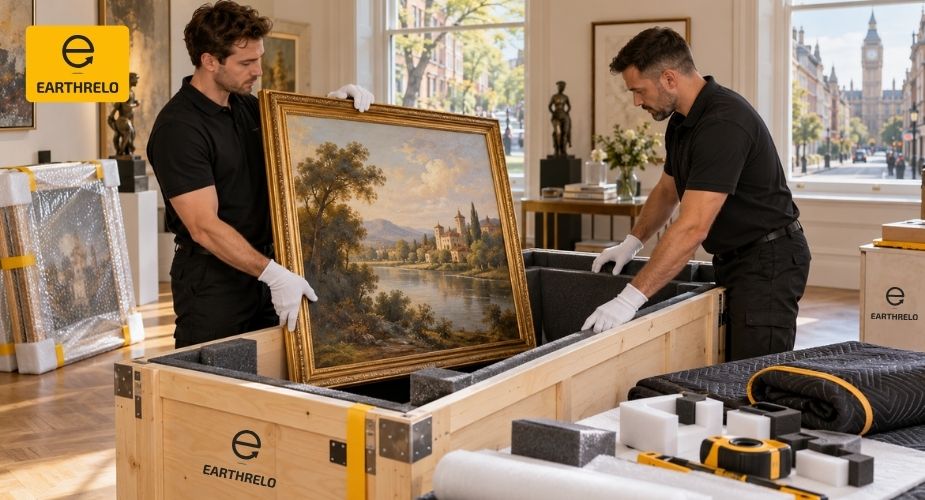
In white glove moving, custom crating is often appropriate for high-value, oversized, unusually shaped, fragile, or irreplaceable works. It is also useful when the piece needs a precise internal support system or when ordinary protective wrapping would leave too much exposure to impact and compression.
A purpose-built crate should fit the artwork and its protective layers. The interior may require cushioning, blocking, suspension, or immobilization designed around the item.
The exterior should be strong enough for handling and stacking conditions that may occur during transportation, while still allowing the crate to be opened and inspected carefully.
For white glove moving, not every item automatically requires a fully custom crate. A framed work with a stable structure and suitable dimensions may have other secure packing options.
The decision should consider value, fragility, route, handling points, and the consequences of damage—not only the purchase price of the crate.
Manage Frames, Glass, and Decorative Elements Carefully
For white glove moving, frames are frequently overlooked because attention naturally goes to the artwork. Yet ornate moldings, fragile finishes, corner joints, hanging hardware, and aged backing materials can be vulnerable during handling. A frame should be protected without placing pressure on the artwork or delicate surface.
Glazing requires specific attention. Glass and acrylic behave differently, and both can create risks if they move against the artwork.
The packing plan should prevent shifting and reduce the chance that a break or scratch affects the piece. Do not apply tape directly to a vulnerable surface or improvise a seal without understanding the material involved.
When arranging white glove moving, remember that sculptures, installations, and objects with projecting parts need a different approach from two-dimensional works. Removable components should be identified, photographed, and protected individually when appropriate. The mover should know which parts may be detached and which must remain supported in place.
Plan Access at Both Ends
Measure doors, corridors, elevators, stair turns, and the final placement area before the move. An item that fits through a front door may not clear a tight landing or elevator interior.
For larger pieces, confirm whether the building requires advance scheduling, a loading dock reservation, or specific documentation from the mover or building management. Planning access early allows white glove moving crews to handle valuable and oversized items carefully without unnecessary delays.
New York pickups deserve particular attention because curb access, building procedures, elevator reservations, and limited staging space can affect the entire operation. Customers comparing international movers in New York, especially those moving to UK from USA, should share these details well before booking to ensure the pickup is properly coordinated.
A quote based only on an address and item count may not reflect the actual work involved. Providing accurate access details in advance helps movers assess the requirements, plan the right resources, and avoid unexpected complications on moving day.
Tell us about your move and get a personalized quote
based on your requirements.
Comparing Fine Art Movers, Crating, and Transport Options
Choosing a provider is not simply a matter of finding the lowest transportation price. The better comparison is between complete scopes of work. Two estimates can look similar while covering very different levels of packing, handling, documentation, delivery, and risk management.
Compare the Scope, Not Just the Total
Ask each provider to explain what the quoted service includes. Important differences may involve pickup labor, wrapping, crate construction, origin access, transportation, destination handling, unwrapping, placement, debris removal, storage, and special delivery coordination.
In white glove moving, a useful estimate should identify assumptions. For example, it should be clear whether the price assumes a loading dock, standard access, a certain number of items, completed inventory information, and delivery during ordinary hours. If those assumptions change, the cost may change as well.
Before booking, ask how additional charges are handled. Possible cost drivers include revised dimensions, extra labor, difficult access, waiting time, storage, changes to the collection, urgent scheduling, special equipment, or destination conditions.
No provider can responsibly promise that every project will cost the same when key facts are unknown, but a transparent provider should explain what could alter the estimate. Condition records establish a useful baseline before white glove moving begins.
Questions That Reveal Operational Experience
A strong consultation should make it easy to understand who will do the work and how the shipment will be managed.
Ask whether the provider has handled comparable artwork, who determines the packing method, how condition is recorded, and who coordinates the international movement.
Also ask how the provider handles exceptions. What happens if an elevator is unavailable? How is a crate opened at delivery? What if a piece arrives with visible exterior damage? Which party should be contacted before anything is moved or unwrapped?
With white glove moving, be cautious of vague descriptions such as “special handling” without an explanation of the actual process. A professional conversation should connect the service to your collection and identify decisions that still need to be made.
When a Consolidated Shipment May or May Not Fit
A consolidated shipment may be practical for a collection that is well packed, not urgently needed, and suitable for shared transportation. It can be more cost-efficient than arranging a dedicated movement, but the shipment may involve more coordination points and less control over the timing or handling sequence.
In white glove moving, a dedicated solution may be more appropriate for a very high-value piece, an unusually fragile object, a time-sensitive exhibition, or a collection with strict delivery requirements. The right choice depends on the artwork, route, schedule, and acceptable risk—not on a universal rule.
Earthrelo can help customers frame this decision by reviewing the collection and the service requirements before a move is scheduled. The important outcome is not selecting the most elaborate option automatically.
It is selecting a level of protection and coordination that makes sense for the artwork. The packing standard should match the care expected in white glove moving.

Have questions about your upcoming move?
Our team is ready to help.
Fine Art Insurance and International Shipping Risk
Fine art insurance deserves careful attention because moving coverage, valuation, and specialized insurance are not interchangeable concepts. The financial protection available for a shipment depends on the provider’s terms, the type of coverage selected, the declared value, exclusions, documentation, and the circumstances of a claim.
Confirm What Coverage Actually Means
Ask for the coverage terms in writing before the move begins. Confirm whether the policy or protection applies during packing, loading, transportation, storage, delivery, and unpacking, and whether there are exclusions for fragile materials, existing damage, improper packing, natural changes, or other circumstances.
When arranging white glove moving, do not assume that a homeowner’s, gallery’s, or collector’s existing policy automatically covers an international move. Contact the relevant insurer or broker and ask what documentation is required.
If a separate fine art insurance solution is being considered, compare the limits, deductible, valuation method, exclusions, and claim process rather than focusing only on the headline amount.
The declared value should be supportable. Depending on the artwork and policy, useful records may include purchase documents, appraisals, invoices, provenance records, restoration documents, and recent valuation information. Requirements vary, so confirm them with the insurer or provider responsible for coverage.
Condition Reports Protect Both Sides
With white glove moving, a condition report creates a record of the artwork before handling begins. It should identify visible marks, frame condition, glazing, components, labels, and other relevant details. Photographs should be clear enough to compare the piece after delivery.
At destination, inspect the exterior of the package before opening it when practical. Photograph unusual dents, punctures, crushed corners, broken seals, or moisture indicators. Follow the provider’s instructions before moving, discarding, or altering damaged packaging. If the item itself appears affected, document the condition and notify the appropriate contact promptly.
In white glove moving, condition records do not eliminate risk, but they make communication more precise. They also help distinguish a pre-existing issue from a new concern, which is important for any review or claim.
Documentation and Destination Coordination
International artwork shipments may require accurate descriptions, values, packing details, and other information for the parties coordinating transportation and entry.
The specific documents and procedures can vary by the artwork, transaction, route, and authorities involved. Your mover should explain which information it needs from you and which responsibilities remain with you or another specialist.
Do not wait until packing day to identify missing information. A mismatch between the inventory, invoice, crate labels, and shipping documents can create avoidable delays or questions. For artwork bought from a gallery or dealer, ask whether the seller, owner, mover, broker, or receiving party is responsible for each document.
For white glove moving, a practical project file should contain the inventory, photographs, condition notes, values, estimates, coverage documents, contacts, delivery instructions, and any building requirements. Keeping those records together makes the move easier to manage when several parties are involved.
Planning a USA-to-UK Fine Art Move With Fewer Surprises
International fine art moving is easier when decisions are made in the right order. Start with the collection and its condition, then confirm access, packing, coverage, transport, delivery, and post-delivery inspection. Reversing that order can produce a low initial quote that later expands when essential details emerge.
Set the Schedule Around the Artwork
When arranging white glove moving, allow time for an assessment, inventory review, packing or crating, transportation coordination, and destination preparation. For international relocations, such as moving fine art to UK from USA, the timeline may also depend on customs procedures, shipping arrangements, and destination requirements. The exact duration varies by collection size, origin, destination, service level, season, availability, and the amount of custom work required.
Avoid scheduling delivery immediately before an exhibition, closing, major event, or flight whenever possible. A small change at the origin can affect the entire chain. Building access, receiving staff, storage arrangements, and the final room should be ready before the shipment is released for delivery.
If a work is needed by a firm date, explain the reason during the first consultation. The provider can then discuss realistic options and identify which parts of the plan depend on third parties. White glove moving works best when each handling stage is planned.
A firm deadline should lead to better planning, not an unsupported promise.
Build a Complete Quote Before Booking
Request a written estimate that separates the major services. Depending on the project, this may include origin labor, protective wrapping, custom crating, transportation, delivery labor, placement, storage, and other agreed services. The quote should also identify what is excluded.
Review the inventory and measurements against the estimate. If the number, size, weight, or condition of the pieces changes, ask for a revised quote before work starts. Keep a written record of decisions made during the planning process, including changes to access, delivery address, schedule, packing method, and coverage.
In white glove moving, a transparent quote is not necessarily the cheapest quote. It is the one that lets you compare like with like and understand the circumstances that could create a change.
That clarity is especially valuable for a New York-to-UK shipment, where building access and international coordination can involve several separate variables.
Prepare the Receiving Location
The destination should be clean, dry, accessible, and ready for the artwork. Decide where each piece will go before the delivery team arrives. If placement or installation is requested, confirm the exact scope and whether specialized equipment or another professional is needed.
For white glove moving, keep the inventory and condition photographs available during inspection. Do not rush to remove all packing materials before confirming that each item is present and appears consistent with its pre-move condition. If something is unclear, pause and contact the responsible provider according to the delivery instructions.
For collectors, designers, and galleries, assigning one person to receive the shipment reduces confusion. That person should have authority to confirm delivery, note exceptions, and coordinate with the building or installation team.
Wrapping Up
White glove moving for fine art from the USA to the UK is a planning discipline as much as a transportation service.
The most important decisions concern the artwork’s condition, the right packing or custom crating method, access at both ends, the completeness of the quote, the scope of fine art insurance, and the documentation used at every handoff.
When comparing fine art movers, look for clear assumptions, realistic discussion of risks, detailed condition records, and a process that adapts to the collection. Ask what is included before booking and what could create an additional charge later.
This is the best way to compare providers fairly and avoid discovering important gaps after the shipment is already underway. A full inventory helps the white glove moving team prepare suitable materials.
Earthrelo can be a practical resource when you need to discuss fine art moving services, custom crating, international coordination, and delivery planning from the USA to the UK.
Share accurate item details, photographs, values, access information, and timing goals so the proposed service reflects the actual project. A well-defined plan gives your artwork the attention it requires and gives you a clearer basis for making the next decision.